We build from practical operations. These field notes describe engineering work and lessons from team projects, without disclosing client identities or claiming unverified results.
Team implementation experienceMulti-company SaaS in development
FIELD NOTE 01 · LINE Booking / Resource scheduling
Sports venue LINE booking
How can phone, front desk and LINE reservations coexist?
OPERATIONAL CHALLENGE
Sports venues operate multiple spaces with opening hours, closures and buffer rules. A LINE booking entry point must still handle existing reservations, concurrent requests and operator approval.
HOW THE WORKFLOW CONNECTS
01
Customer entry
Choose a space, date and available slot inside LINE.
02
Availability engine
Calculate times based on duration, buffers, weekly schedules and exceptions.
03
Conflict protection
Check availability again when creating a reservation.
04
Operator handoff
Approve or reject in an admin flow; export booking data for legacy workflows.
SCHEDULING RULES / VENUE BOOKING
A booking engine needs operational rules, not just a calendar.
Duration and buffers
A project requirement example uses 60-minute sessions with 15-minute buffers before and after, and start times at 15-minute intervals. Slot calculations must account for existing reservations.
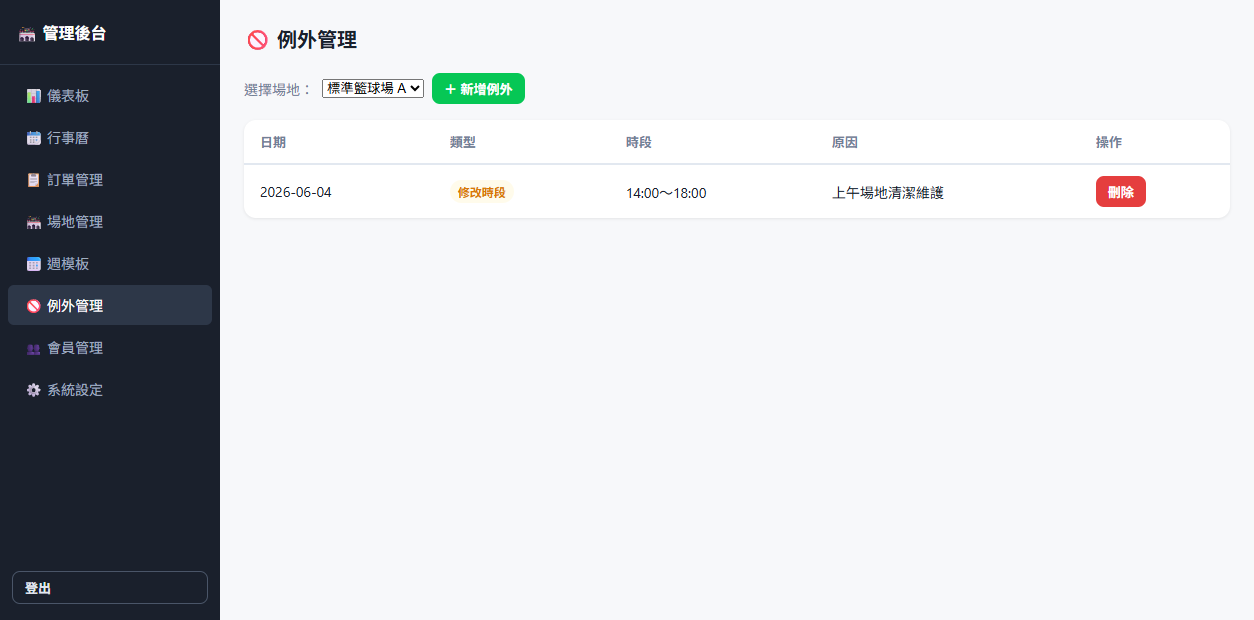
Opening exceptions
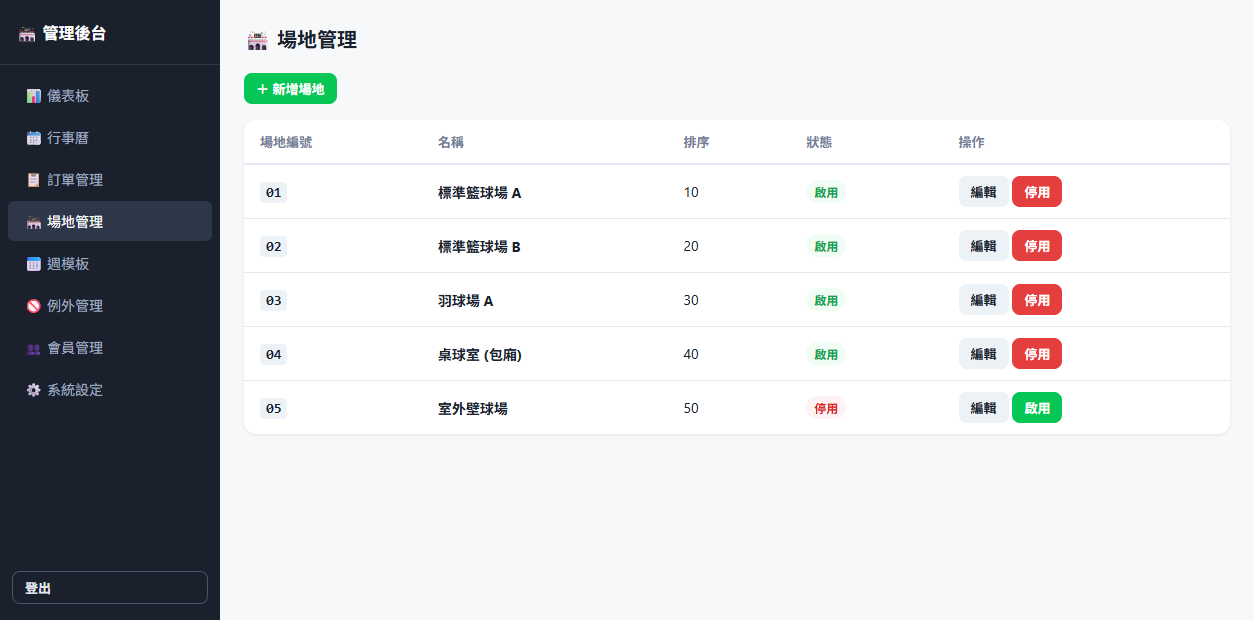
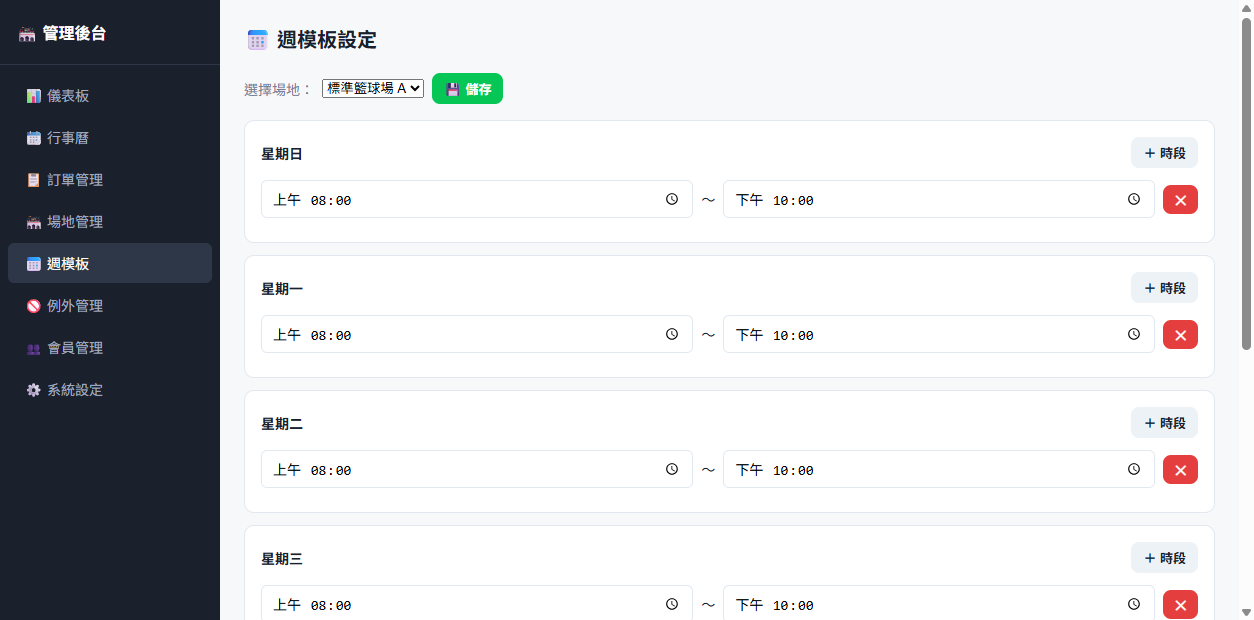
Weekly opening templates need closures, temporary changes and same-day lead-time limits (such as booking at least two hours ahead).
Concurrent requests
Two people should not secure the same resource and time. Recheck availability when submitting, then let staff approve or reject requests.
Legacy coexistence
Phone and front desk workflows can remain in the existing management system. Admin review and exports connect the new channel.
Product validation: Correctly reject conflicts, make exceptions manageable for staff, and reliably hand off data to existing systems. These are implementation scenarios, not published operating results.
These screenshots come from the venue booking engineering project; customer personal data is excluded. Try the interactive simulation ↗ to explore booking operations. It creates no real booking.
Resource model / Scheduling engine / Conflict validation / Approval states / Export
IMPLEMENTATION STATUS
Project code and deployment notes cover LINE booking, scheduling, conflict handling and admin modules. Production D1 migration state and real-device LINE acceptance still require confirmation.
SAAS PRODUCT INSIGHT
The same resource, time-slot and review capabilities can serve meeting rooms, instructors, studios and other appointment businesses.
FIELD NOTE 02 · LINE LIFF / Events and document workflows
Temple service registration
Can registration, payments and prayer documents become one coordinated flow?
OPERATIONAL CHALLENGE
Temple services gather attendee and family details, event options, payment records and printable documents. Repeated copying across paper and chat creates avoidable work.
HOW THE WORKFLOW CONNECTS
01
LIFF registration
Collect participant details from a LINE-friendly registration form.
02
Events and orders
Track capacity, session options, order records and operational status.
03
Payment and fulfillment
Connect payment status handling with gifts and delivery administration.
04
Lists and documents
Export event spreadsheets and batch PDF documents with configurable layouts.
ANONYMIZED WORKFLOWCarry one registration record into event operations
01LINE formParticipant and event options
02Events and ordersCapacity, plans and status
03Payment and fulfillmentPayment status and gifts
04Lists and documentsSpreadsheets and batch PDFs
Redrawn from the project workflow; no registration screenshots or participant details are used.
WORKFLOW MODULES / EVENT REGISTRATION
Forms, orders, payments and documents are all connected.
Conditional registration
Session capacity, pricing plans, family member details and optional gifts can differ by event. Administrators must manage these conditions.
Orders and payment states
Registration creates an order. Payment integration updates status for reconciliation; each production merchant configuration requires acceptance checks.
Event lists and PDF files
Collected information populates document layouts and batch PDFs, while event lists support staff preparing for on-site activities.
Reusable templates
Activity templates, dynamic form schemas, pricing rules and document field mapping are planned as configurable modules shared across multiple organizations.
Product validation: Can templates cover common event differences, stay consistent with order states, and generate correct documents? No unsupported business metrics are claimed.
REUSABLE BUILDING BLOCKS
Activity templates / Form schema / Business rules / Payment orders / Document mapping
IMPLEMENTATION STATUS
Project documentation covers LIFF, event and order management, and PDF generation. Merchant payment configuration and production results require individual acceptance.
SAAS PRODUCT INSIGHT
Turning event variations into settings creates reusable SaaS building blocks instead of requiring new code for every temple.
PROJECT → PLATFORM
Building repeatable operational SaaS.
The same underlying pattern appears across both industries: capture a request, validate rules, track status, support staff review, and integrate with existing tools. We are extracting these capabilities into configurable product modules.
Implemented in projects
Scheduling, conflict checking, operational orders and document workflows.
Under development
Business accounts, industry templates, isolated data and tenant-level settings.
Exploring
Claude API for natural language intake, structured summaries and support drafts, subject to business rules.
2026 / EARLY STAGE
From project work to configurable SaaS.
Our initial market is small businesses in Taiwan with recurring staffing and administrative coordination needs. We validate specific workflows before standardizing repeatable modules. Subscription SaaS and optional implementation services are a planned commercial model. We do not publish unverified customer, revenue or savings figures.